
Published in support of World Heart Rhythm Week 2026 #WHRW2026 #KnowYourPulse
It’s an afternoon. You are scrolling through Instagram and a post prompted you to check how your heart is doing. So, since you are already sat down, you pressed your index and middle fingers against your neck, and there it is – a steady, rhythmic pulse.
You can feel the beats. Sixty-eight in one minute. ‘Seems okay,’ you say to yourself and go back to the Instagram…
A couple of minutes later, you stop mid-scroll and you realise that the 68 number didn’t really tell you all that much.
Heart Rate vs Heart Rhythm: The Tempo and the Melody
Think of your heart as a musician. Heart rate is the tempo – how many beats happen per minute. Heart rhythm is the melody – the actual pattern those beats make.
For your heart’s ’song’ to sound good it needs the right tempo and the right pattern. If your heart beats 70 times a minute while doing so in a chaotic, disorganised way, that’s something to be aware of (and check). Unfortunately, though, your smartwatch, or your fingers pressed to your neck for 60 seconds, will simply not detect it.
That chaotic pattern has a name. In many cases, it’s atrial fibrillation (AFib) the most common heart rhythm disorder in the UK, affecting around 1.4 million people. But it’s far from the only one. Supraventricular tachycardia (SVT), bradycardia, heart block, and ventricular ectopics are all rhythm disorders that can remain completely hidden behind a perfectly plausible pulse reading.
Why Your Wearable Isn’t a Heart Monitor
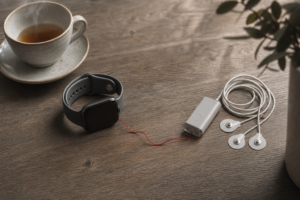
Consumer wearables – the Apple Watch, Fitbit, Garmin – are impressive pieces of technology, and they’ve genuinely changed how millions of people engage with their health. However, most wearables measure heart rate using a technology called photoplethysmography (PPG) – essentially a light sensor on the back of the device that detects changes in blood flow through the skin. It counts pulses. It does not read the electrical signals that govern your heart’s rhythm.
Even the newer wearables that include a single-lead ECG feature – activated by pressing a finger to the watch crown for 30 seconds – capture only a brief snapshot, in one electrical direction, on demand. As research published in the Cleveland Clinic Journal of Medicine confirms, there is a large gap between consumer-grade and medical-grade devices for detecting more complex arrhythmias.
What a Clinical ECG Actually Measures
A clinical-grade ECG (electrocardiogram) records the electrical signals your heart generates with every beat. Every wave on an ECG trace corresponds to a specific part of the heart’s electrical activity.
A trained cardiographer reads the shape, spacing, and pattern of these waves to determine not just how fast your heart is beating, but precisely how it’s beating.
The Conditions That Only Rhythm Monitoring Can Reveal
Checking your pulse cannot tell you whether you have:
- Atrial fibrillation (AFib) – chaotic electrical activity in the upper chambers of the heart, associated with a significantly elevated stroke risk
- Supraventricular tachycardia (SVT) – sudden bursts of rapid heartbeat originating above the ventricles, often dismissed as anxiety or caffeine
- Bradycardia – an abnormally slow heart rhythm that can cause fatigue, dizziness, and fainting
- Heart block – a disruption in the electrical signals between the upper and lower chambers
- Ventricular ectopics – extra, out-of-sequence beats that can indicate underlying electrical instability
Know Your Rhythm This World Heart Rhythm Week
This June, as part of #WHRW2026, thousands of healthcare professionals and advocates across the UK will be encouraging people to Know Your Pulse. It’s a vital message. Pulse awareness is the first step.
But rhythm makes the full picture, and for conditions like AFib, which can cause no symptoms at all for years before resulting in a stroke, a full picture is not a luxury. It’s a safeguard.
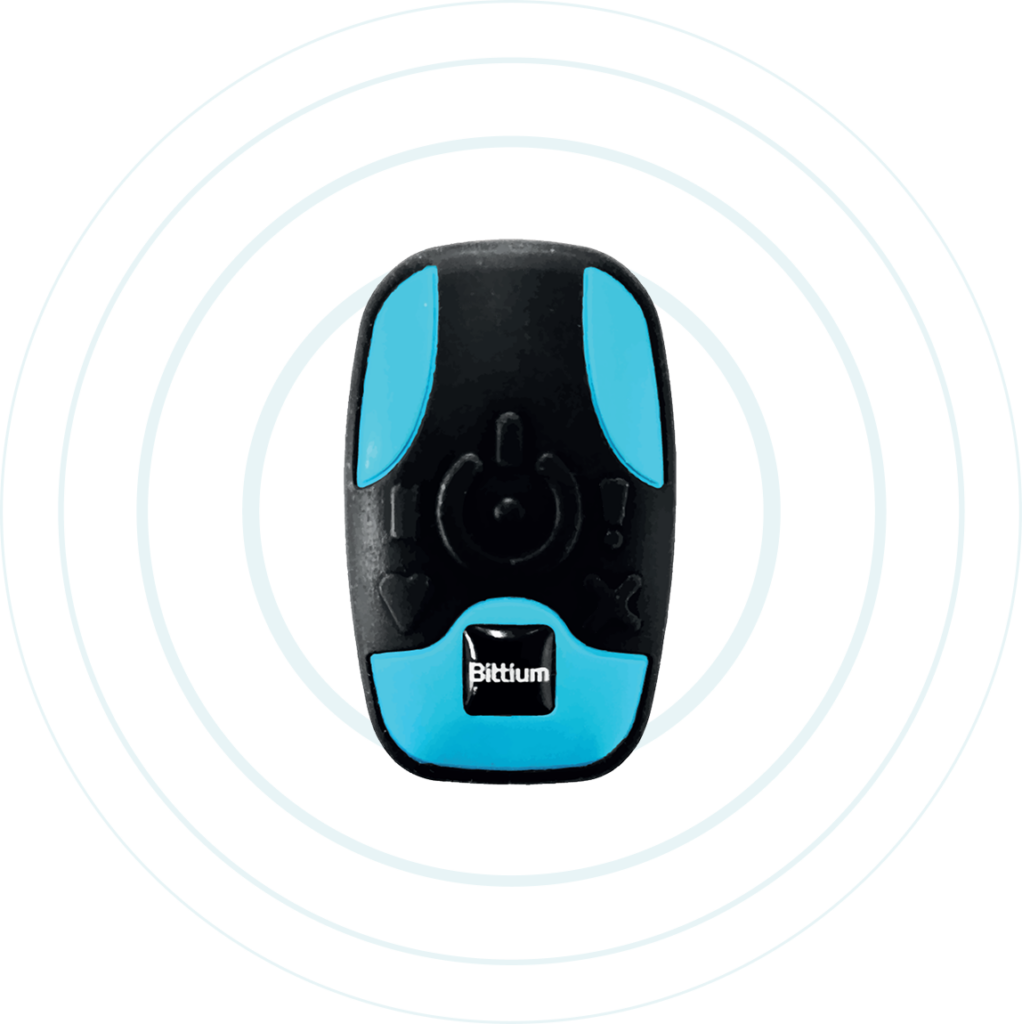
Your Heart Check makes clinical-grade, continuous Holter monitoring accessible from home, anywhere in the UK. No GP referral or hospital visit required.
Your heart has a rate. Make sure you know its rhythm.
Start your heart rhythm check at www.yourheartcheck.com