
The Waiting Game: Why NHS Cardiology Appointments Take So Long
Whilst you wait for a cardiology appointment, a whole season can change.
According to the British Heart Foundation, many people wait up to 18 weeks for their appointment.
To put it in context: you could have seen your GP before the summer holidays and still be waiting now that the next school year has started. The kids may have grown out of another shoe size, you’d have watched two series on Netflix, and maybe even forgotten what you told the GP in the first place.
That’s a long time! Especially because whilst the season’s changed, your symptoms haven’t – well, they haven’t improved at least. Your heart still flutters at random. You still find yourself out of breath. The worry is still there, loud and constant.
Heart disease is the number one challenge. There are over 7.6 million people with cardiovascular disease in the UK, which creates the high demand for the cardiology treatments and in turn creates this frustrating waiting list.
Heart Flutters and Palpitations Don’t Pause While You Wait
You try to go about your daily routine and focus on anything but your heart troubles. ‘I’ll be alright,’ you keep repeating yourself, but not believing one word of it.
You smile when someone asks you how you are doing, ‘I’m okay’ you answer even though you know that they know you’re worried.
Then there are those awkward excuses you come up with when you get out of breath or you stop mid-sentence because your heart races, and someone jokes you need to lay off the coffee. If only it were that simple.
You skip your child’s football practice because you get light-headed quickly. You pretend to be fine at work when really you are distracted by another episode of palpitations.
You’re only in your 40s. This shouldn’t be this hard, right? No one comments, but everyone knows that you really need to see the doctor about this.
The Silent Struggle: Sleepless Nights and Constant ‘What Ifs’
The silence is the hardest part. No answers. At 3 a.m., while everyone else is dreaming about winning the lottery, you’re stuck in the world’s least fun game of ‘what if?‘
- What if I start having those chest pains everyone warns me about?
- What if I don’t see my kids grow up?
- What if eating kale really is the answer?
It feels like living with a shadow over your shoulder, never quite knowing when the next flutter will strike or what it means. Every skipped beat pulls your mind back to the same question: what if?
Whether it’s the school run, a work meeting, or a weekend with friends, the shadow follows you everywhere. And yes, it sucks. About as much as waiting on hold for a call centre, but with your health on the line.
Turning to Google for Answers About Heart Symptoms
You feel like you need to do something – anything. So you do what most of us do, you ask the Google doctor:
- Causes of heart flutters
- Heart palpitations at night
- Are heart flutters serious?
- Heart flutter and shortness of breath
Every result is either too vague or too alarming. One site says don’t worry. The next says see your doctor. Which would be fine, if you weren’t already stuck waiting to see one.
Your search history could double as a cardiology textbook. If that textbook was written by people arguing in the comments section, that is. And thanks to search engines, one innocent ‘heart flutters’ query means your social feed now thinks you’d enjoy a daily diet of cardiology horror stories. Thanks, algorithms.
You know Dr Google is not helping at all, but at least it gives you that temporary sense of control. It’s not getting you anywhere, but anything is better than that dreadful wait.
Coping Mechanisms (That Don’t Work)
Every morning you glance at the calendar, but the appointment doesn’t seem to get any closer, ‘6 more weeks…’ you sigh.
The longer you wait, the more creative your coping gets:
- You keep checking your pulse, as if catching your heart in the act might give you back some control.
- You avoid exercise because uncertainty makes everything feel risky (and let’s be honest, you weren’t heartbroken about skipping burpees).
- You lean on comfort food because no one reaches for broccoli when anxiety is in charge. Chocolate biscuits remain undefeated in the ‘temporary reassurance’ category.
Why Patients Need Clear Answers About Their Heart
And then there’s the list of questions you’re building for your cardiologist. It’s already long enough to pass for a master’s thesis. At this rate, you half-expect them to hand you the stethoscope.
You just want some answers and figure out what is wrong and what to do about it. You’re ready to make a change, whatever that might look like. You’ll even try a veggie smoothie if that’s what it takes.
The only thing keeping you going is the hope that once you understand what’s happening, you’ll finally have a plan.You catch yourself daydreaming about that appointment and the sigh of relief when the doctor looks at you and says, ‘How can I help you today?’
A Better Way: Holter Monitoring and Capturing Heart Rhythm at Home
It doesn’t have to be like this, though. There is a way to turn uncertainty into clarity. You don’t have to be at the mercy of the waiting list before you get any answers.
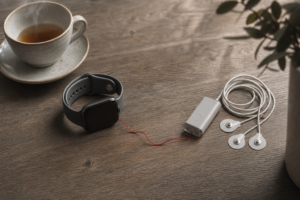
There is a way to walk into your cardiology appointment with real data about your heart, not just questions. Instead of praying for your heart to misbehave in a 10-second ECG, you capture its full story at home.
Just imagine walking into that doctor’s office and you hand them a detailed report of your heart’s rhythm performance analysis.
You’re calm because the doctor doesn’t have to explain what all of this means – you already know. The doctor holds the detailed part of the report, you have the part in plain English. The doctor is happy too. They want data as more concrete information helps them help you faster.
That’s not the best part though. Because you didn’t have to wait 18 weeks for answers, you sleep through the night without playing 20 rounds of ‘what if’ with yourself. You are saying yes to exercise without feeling like you’re pushing your luck. You don’t cancel plans because you are so overwhelmed with worry, you even stop snapping at the kids, you’re that calm. And, most importantly, your heart is less of a mystery guest star in your day-to-day life.
From Uncertainty to Peace of Mind
This scenario is not wishful thinking. It’s a service available today.
While we can’t shorten NHS waiting times, we can shorten the uncertainty. And that’s a game-changer for your peace of mind. Yes, you can get a comprehensive analysis of your heart’s rhythm without seeing a cardiologist, and can do something productive whilst you wait those 18 weeks.
We can help you regain control of your heart health and your care. Send us a message if you want to know more, or visit our service page.
Your heart deserves answers. And so do you.